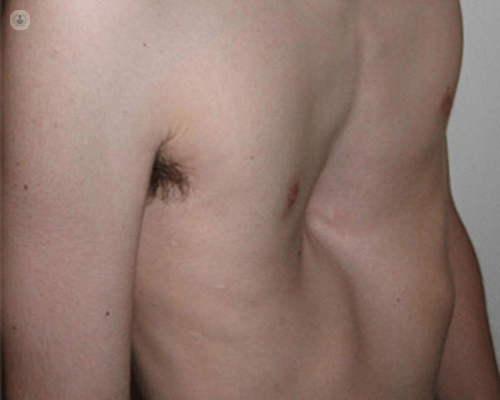
The chest is raised forwards, either on one (unilateral) or centrally near the breast bone.
An Orthotist who specialises in Pectus provides a thin brace can be applied to the chest area with a pressure pad over the raised section. Over time the patient can build up wearing this and build up the pressure. eventually (depending upon flexibility and other factors), the rib cage will remain less prominent without the brace.
Specialist physiotherapy can help to provide exercises whilst wearing the brace, including breathing techniques to improve flexibility, optimise the pressure and stabilise the rib cage in the new desired shape.
The physio guides the patient through the process of brace weaning and in and weaning out and helps them to overcome the issues that can crop up.
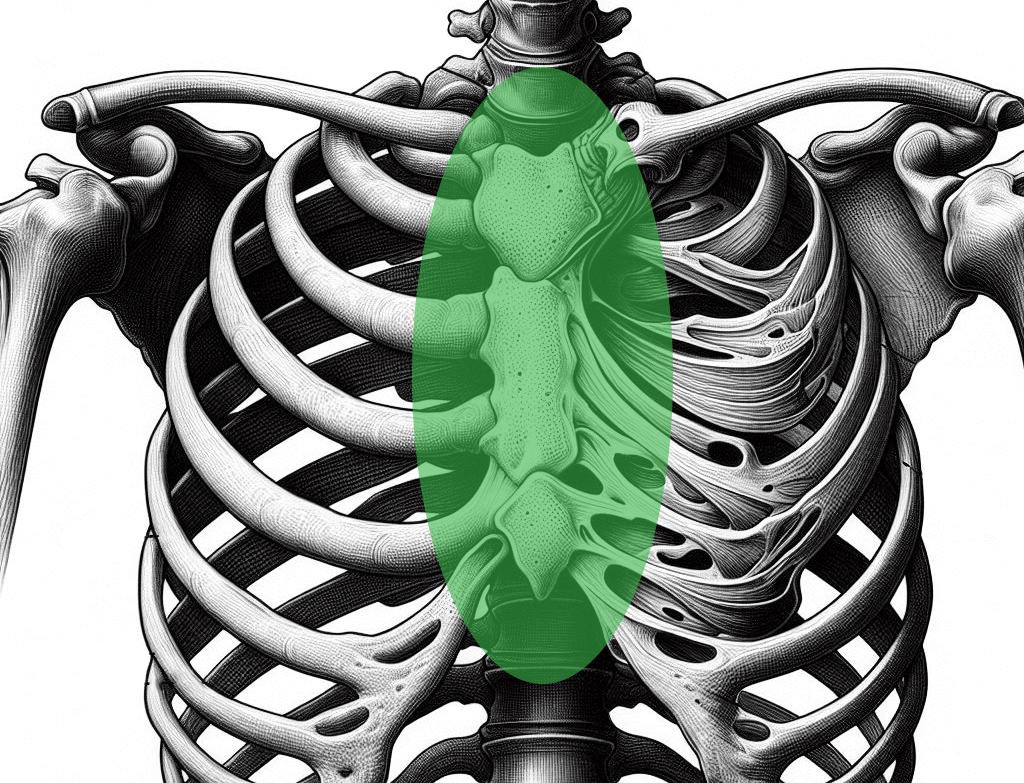
The chest is raised forwards, either on one (unilateral) or centrally near the breast bone.
A vacuum suction bell is provided by a specialist orthotist in pectus. This is placed over the sunken areas of the chest wall. If rib flare is significant this can also be addressed, but with a thin brace. the vacuum bell is attached and time is slowly increased wearing the bell and or brace which is guided by the specialist physiotherapist.
Exercises are performed to increase flexibility and breathing techniques are used to change the pressure internally to help the external pressure work efficiently.
After time the rib cage remains at the desired shape without the orthotic and the patient is guided on how to stabilise the chest in the new shape.
Slipped Rib Syndrome is not well known. Patients tend to be relatively young, have a history of trauma to the chest wall and have had everything else possible ruled out by a list of medical professionals.
There are specialised private hospitals who can diagnose this under ultrasound to see if steroid injections will help relieve the acute pain. Specialist physiotherapy aims at stabilising the rib onto the the rib cage wall whilst there is a pain free window.